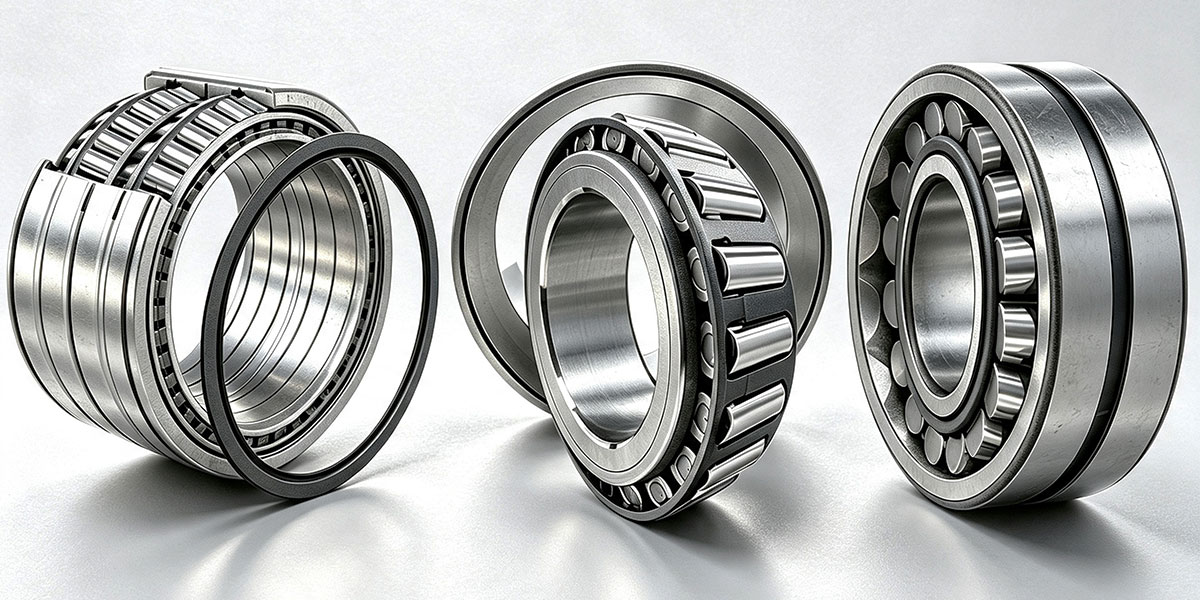
In mechanical processing, industrial production lines, motor transmission and various types of equipment, bearings are core components that ensure the stable operation of complete machinery. The long-term stable operation of equipment, reduction of downtime failures, and control of maintenance costs are all closely related to the working condition of bearings. In practical application, bearings are prone to malfunctions. Once abnormalities occur, minor issues such as equipment abnormal noise, vibration and reduced operation accuracy will arise, while severe cases may lead to direct shutdown and production suspension. In extreme scenarios, mechanical safety accidents can be triggered, bringing additional maintenance expenses and production capacity losses to factories. This article elaborates on the common failure types of bearings, underlying causes and preventive measures, helping enterprises reduce bearing failure risks and extend the service life of bearings and equipment.
I. Common Bearing Failure Types and Identification Key Points
Bearing failure rarely occurs suddenly; obvious marks will be left on the surface. Preliminary judgment of specific problems can be made through visual inspection, saving time for subsequent troubleshooting and problem-solving. Below are seven most frequent bearing failure forms encountered in workshops:
1. Fatigue Spalling
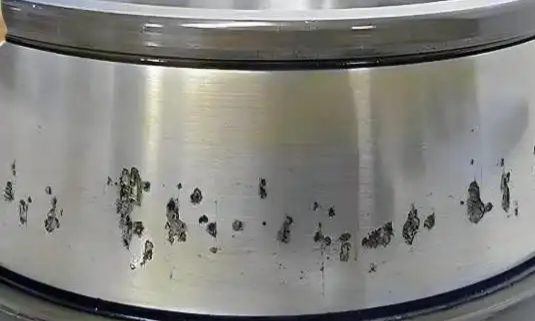
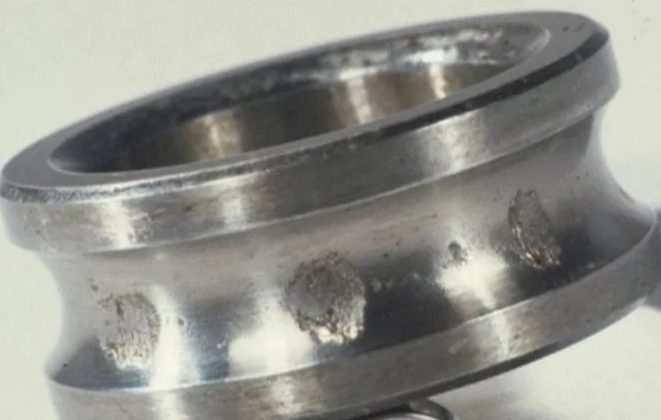
Fatigue spalling is the most common problem of rolling bearings, mainly occurring on raceways (tracks for steel ball movement) and steel balls. Simply put, bearings bear repeated pressure for a long time, causing surface metal to peel off layer by layer like skin peeling. It starts with tiny pits, which gradually expand and connect into large areas, eventually damaging the raceway and disabling normal bearing rotation.
Identification Key Points: Evenly distributed small pits on the surface of raceways or steel balls, with large areas of metal peeling in severe cases; abnormal vibration and noise during bearing operation, which become increasingly obvious as damage worsens. It should be noted that this type of damage deteriorates gradually. If shutdown and handling are not conducted in a timely manner, surface damage marks may fade away, bringing difficulties to subsequent troubleshooting.
2. Abrasive Wear
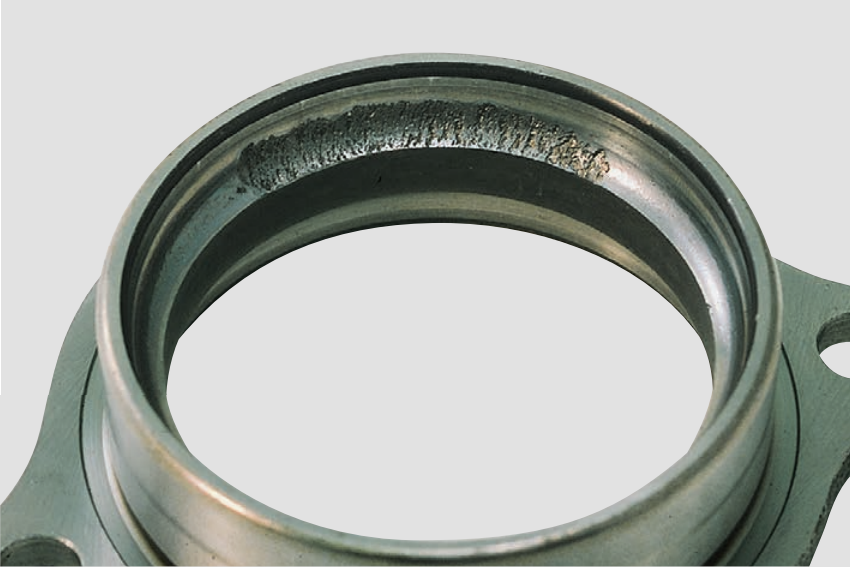
Abrasive wear is one of the most prevalent bearing failures, primarily caused by foreign impurities entering the bearing interior. Hard particles such as dust, metal debris and sand enter the bearing and act like sandpaper, causing friction between steel balls and raceways. This results in rough surfaces, scratches, increased internal clearances and abnormal rotation.
Identification Key Points: Obvious scratches and rough textures on bearing surfaces, with dull and coarse inner raceway walls; loud operating noise that intensifies with more impurities, and even bearing jamming in severe cases. For example, cylindrical roller bearings with such wear show distinct abrasion marks on roller end faces, mostly caused by impurity ingress or poor lubrication.
3. Corrosion Failure
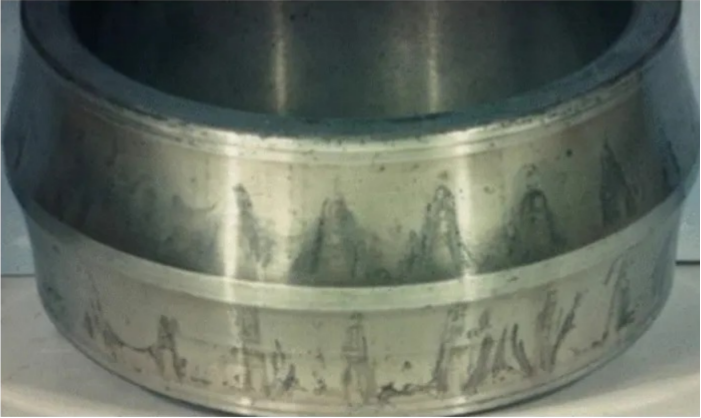
This issue frequently occurs in humid, acid-base and salt spray environments, mainly divided into three categories: rusting, chemical corrosion and electric corrosion. Rusting is the most common type; steel bearings develop rust spots when exposed to water and humid air. Electric corrosion is caused by current passing through bearings, leading to surface material damage and peeling.
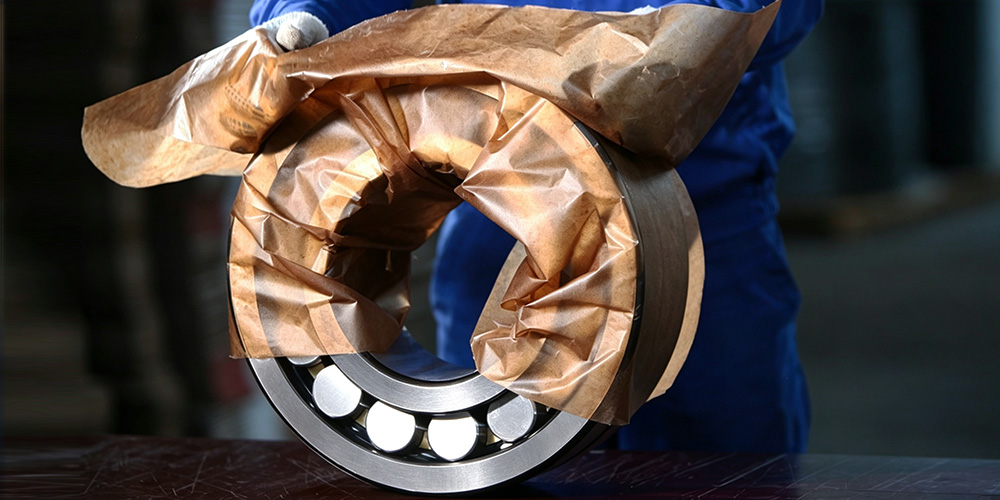
Identification Key Points: Reddish-brown rust spots and small corrosion pits on rusted bearings, covering the entire raceway in severe cases and locking bearing rotation; electric corrosion forms dark gray corrugated grooves on raceways with corresponding marks on steel balls, which can be distinguished from depressions caused by vibration. In addition, improper bearing storage also leads to rusting and requires daily attention.
4. Overheating Burning
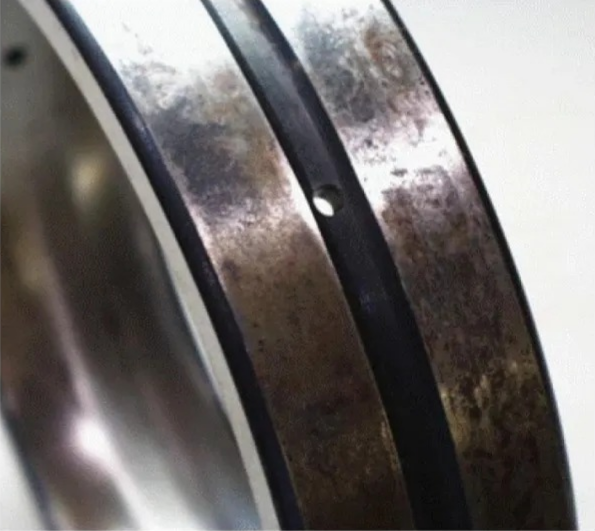
Highly destructive, overheating burning usually happens in high-speed and poorly lubricated equipment. Excessively fast rotation, insufficient lubricant or excessive mounting tightness increases internal friction and sharp temperature rise. This causes bearing surface discoloration (mostly blue and brown), metal softening and ablation, and even adhesion and seizing in serious conditions.
Identification Key Points: Noticeable discoloration on bearing surfaces, softening and adhesion of raceways and steel balls; rapid temperature rise during operation accompanied by burnt odor. Failure to shut down timely will result in direct bearing scrapping and potential shaft damage.
5. Plastic Deformation
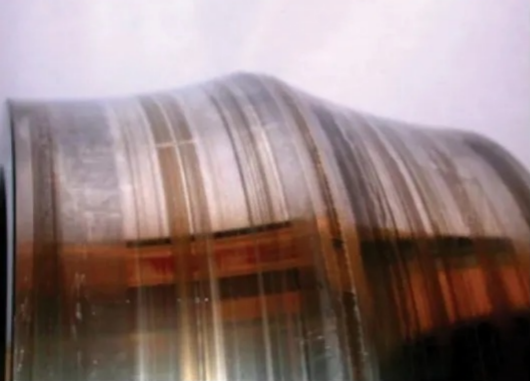
In short, plastic deformation refers to bearing crushing damage, mainly caused by severe impact, long-term overload or excessive preload during installation. When the pressure at the contact points between raceways and steel balls exceeds the material bearing limit, permanent indentations form and hinder normal operation. Hard particles entering the bearing can also press pits on raceways, which also falls into plastic deformation.
Identification Key Points: Visible dents and pressure marks on raceways or steel balls; intense impact noise and vibration during operation, increased bearing clearance and reduced accuracy that fail to meet equipment operation standards. Bearings stationary for a long time under periodic vibration may develop “false indentations” — depressions on raceways matching steel ball spacing, often accompanied by rust.
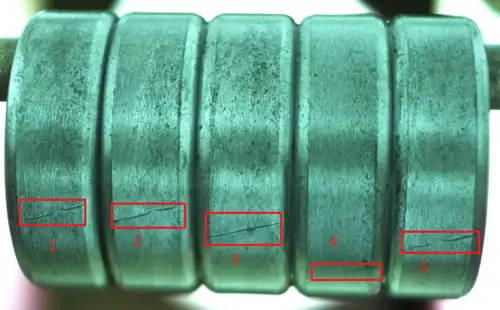
6. Cracks and Fracture
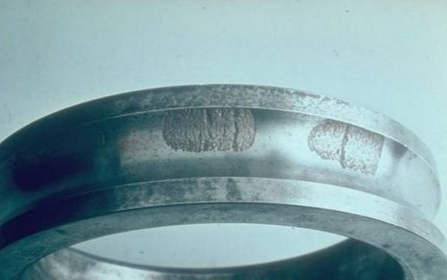
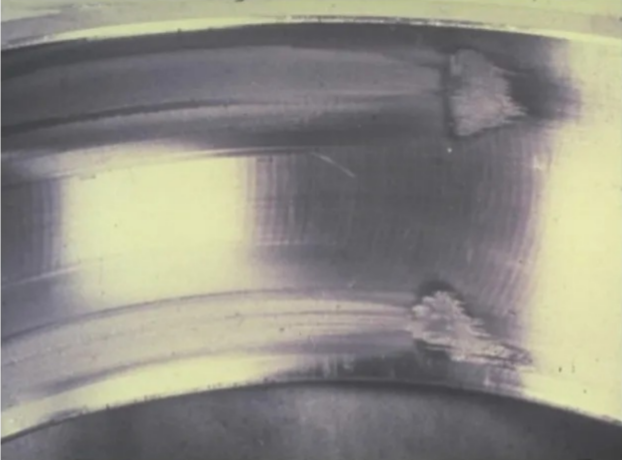
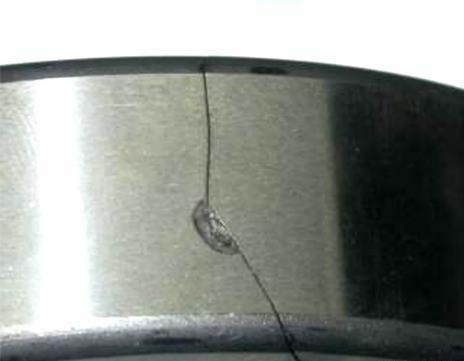
A sudden and highly hazardous failure, cracks and fractures are mainly induced by violent knocking during installation, strong impact, inherent material defects or gradual expansion of tiny initial cracks. Cracks on inner rings, outer rings, steel balls or cages expand rapidly during operation without timely detection, eventually leading to fracture, equipment shutdown and even safety accidents.
Identification Key Points: Visible cracks on bearing surfaces under a magnifying glass, with fractures mostly distributed at outer ring edges or steel balls; irregular operating noise and sudden increased vibration amplitude. Severe fracture sounds may occur before equipment stalling.
7. Lubrication Failure
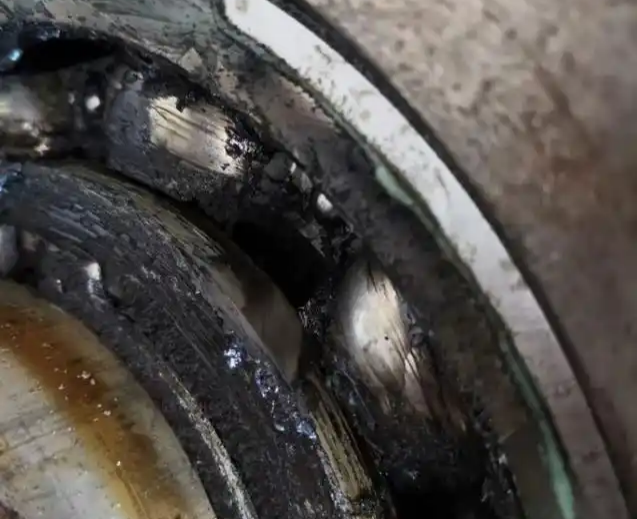
Not an independent failure type, lubrication failure is the root cause of most bearing malfunctions. Deteriorated, insufficient or mixed lubricants, as well as improperly selected lubricant models, prevent the formation of a protective oil film inside bearings. Direct friction between steel balls and raceways accelerates wear, overheating and aging, and further triggers various secondary failures.
Identification Key Points: Blackened, caked and deteriorated internal lubricant or obvious oil shortage; significantly increased noise, vibration and temperature during operation. Long-term poor lubrication will gradually induce wear, overheating and other faults.
II. Core Causes of Bearing Failure
Bearing failure is rarely caused by a single factor but the combined effect of improper installation, poor lubrication, harsh operating environments, inferior bearing quality and other issues. The following five core causes are for targeted troubleshooting:
1. Improper Installation
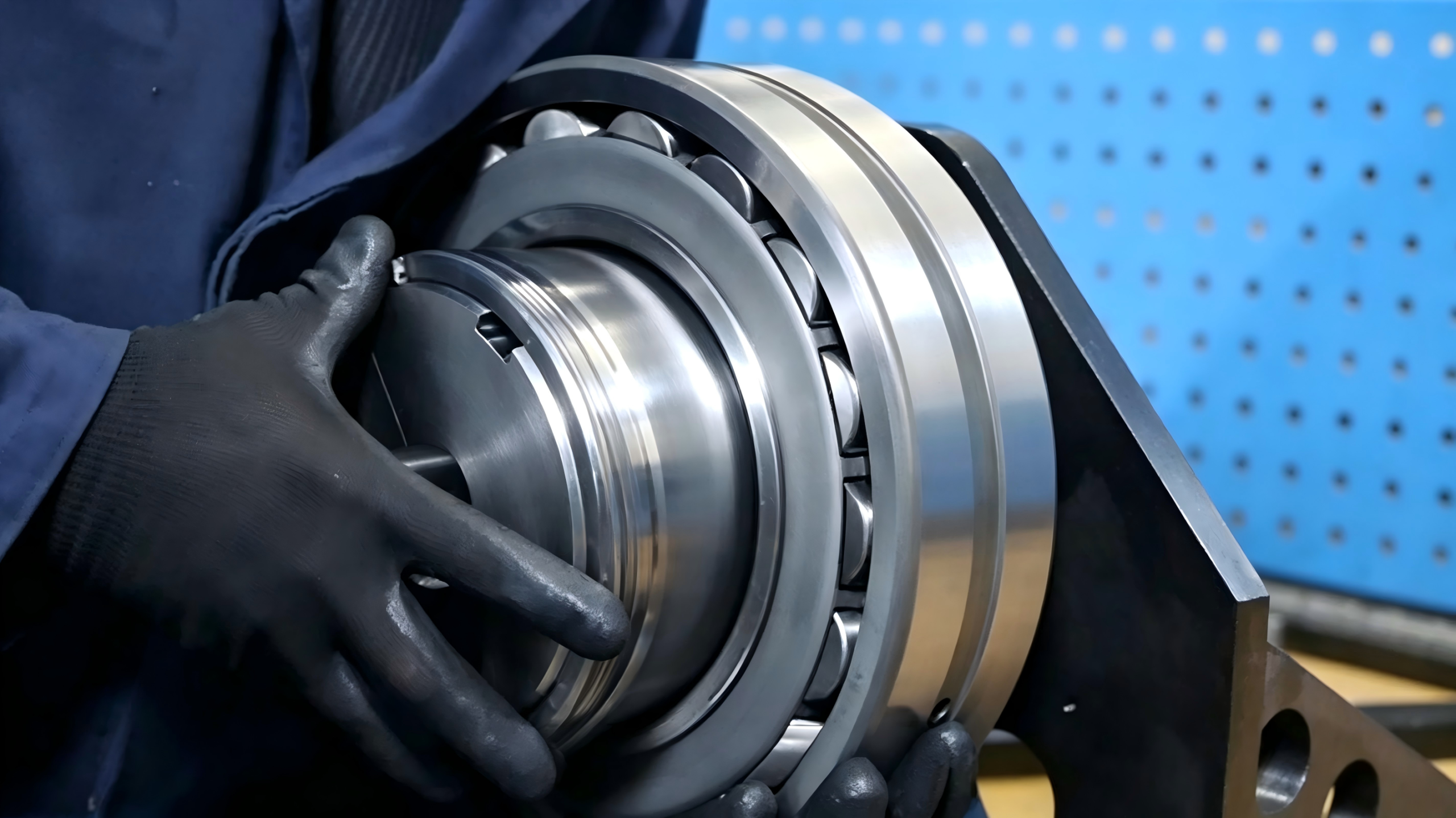
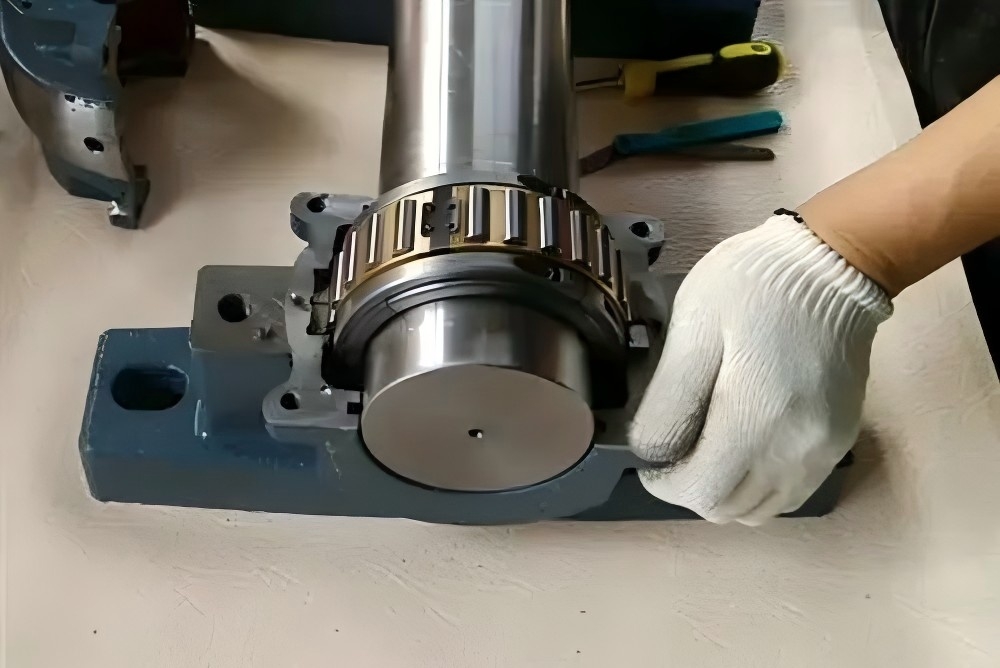
Non-standard installation operations are the leading cause of premature bearing service life reduction. Common problems include excessive or loose fit between bearings, shafts and bearing housings, misalignment and coaxial deviation, violent knocking during mounting, improper bearing housing installation and particle contamination on contact surfaces. Excessively tight mounting leads to insufficient internal clearance and increased friction, resulting in overheating; misalignment generates extra stress, causing local overloading and accelerated wear.
2. Poor Lubrication
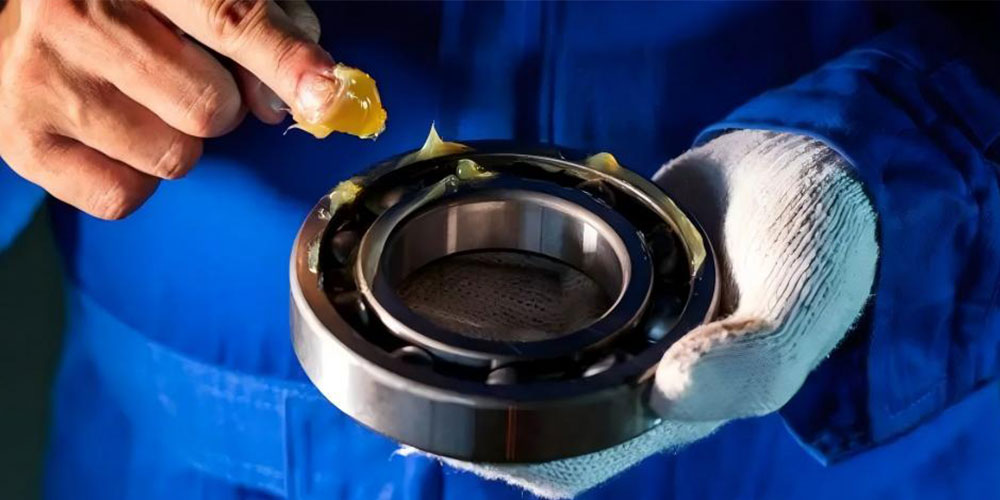
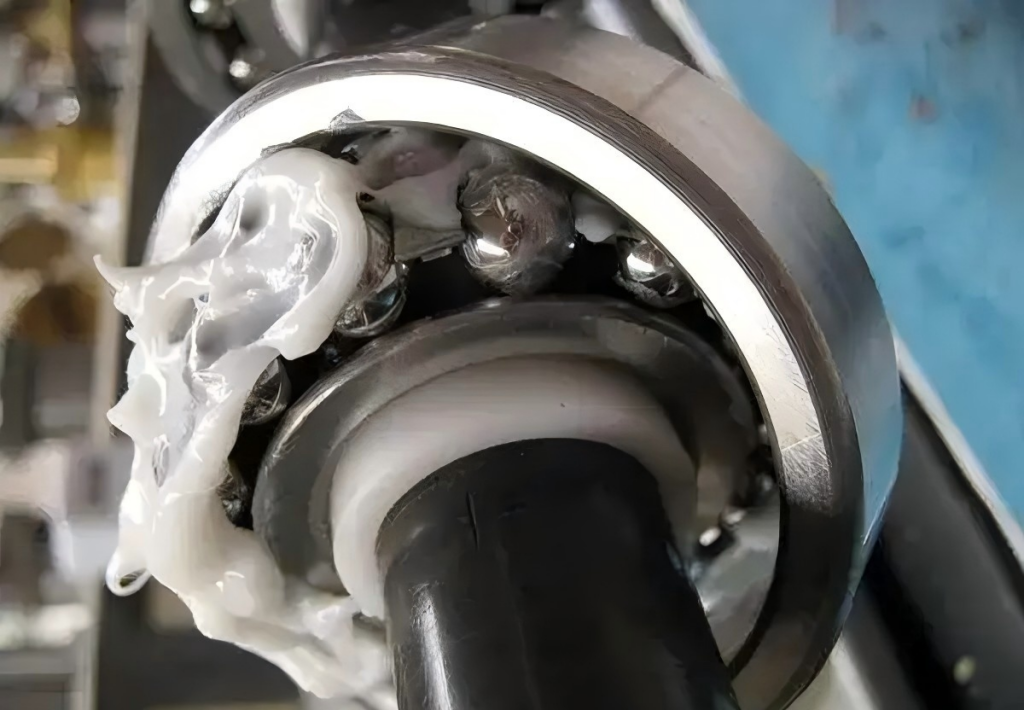
As mentioned above, poor lubrication is the primary trigger for most bearing failures, covering three major aspects: selecting lubricants mismatched with equipment speed, load and temperature; excessive or insufficient oil filling — insufficient oil fails to form a complete protective oil film, while overfilling leads to poor heat dissipation and temperature rise; long-term non-replacement of aging, deteriorated and contaminated lubricants that lose lubricating properties. Impurity contamination in lubricants also damages the oil film and accelerates wear.
3. Seal Failure
Bearing seals function to block dust, moisture and impurities while preventing lubricant leakage. Damaged, aging sealing rings or unreasonable sealing structure design allow external impurities to easily invade bearings, causing wear and rust. Meanwhile, lubricant leakage results in oil shortage and subsequent lubrication failure. Abrasive wear caused by poor sealing is particularly prevalent in high-dust industries such as mining and metallurgy.

4. Improper Operation
Each bearing is designed with a rated load and limit speed. Long-term overload, overspeed operation or service beyond the designed environmental range (extreme high/low temperature, excessive vibration) causes abnormal internal stress and accelerates bearing wear and aging.
5. Inferior Bearing Quality
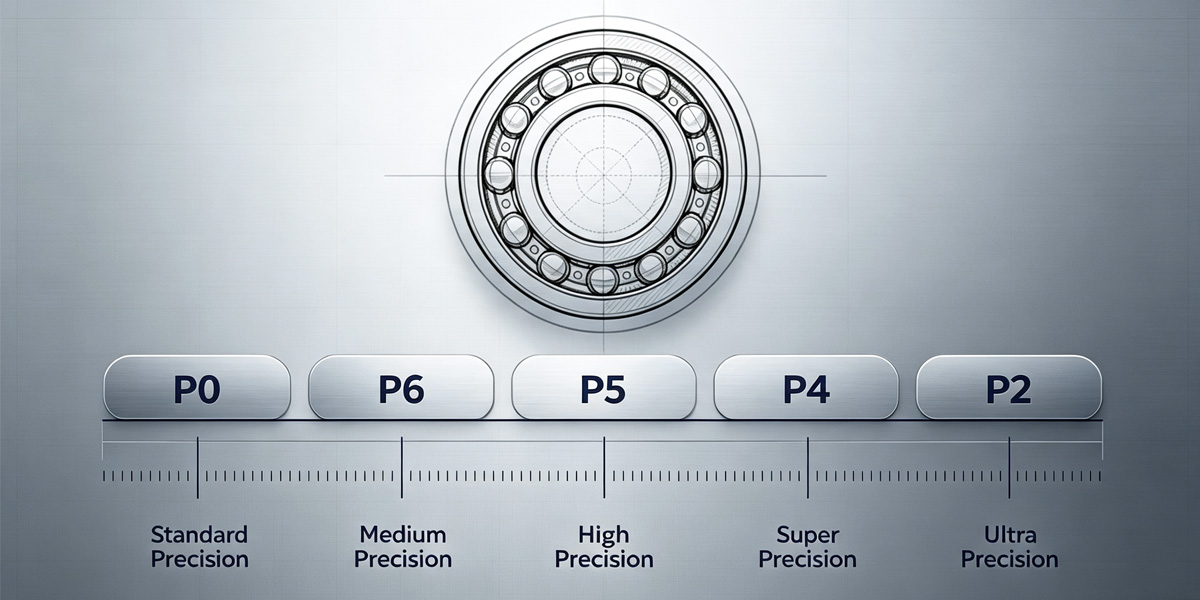
Bearing material and processing technology directly determine service life and damage resistance. Bearings manufactured with low-purity steel containing impurities, substandard heat treatment and insufficient machining accuracy lack hardness and toughness, making them susceptible to cracks, wear and indentations. Inadequate heat treatment reduces surface hardness, while rough raceway surfaces from low-precision processing intensify frictional wear.
Conclusion
As core transmission components of mechanical equipment, the stable operation of bearings is critical to production line efficiency, maintenance cost control and workshop safety. Industry data shows that abrasive wear, contact fatigue spalling and environmental corrosion are the three most frequent bearing faults, while non-standard installation, inadequate lubrication, seal damage, overloaded operation and inferior accessories are the key causes of frequent failures.
To reduce bearing faults fundamentally, five basic management measures should be implemented: standardize disassembly and installation procedures, establish standardized lubrication maintenance systems, regularly inspect and replace sealing components, operate equipment in strict accordance with rated parameters, and select high-quality qualified accessories with daily routine inspections. Solid daily operation and maintenance can effectively extend bearing service cycles, ensure continuous and stable operation of the entire production line, and reduce overall operation and maintenance costs.