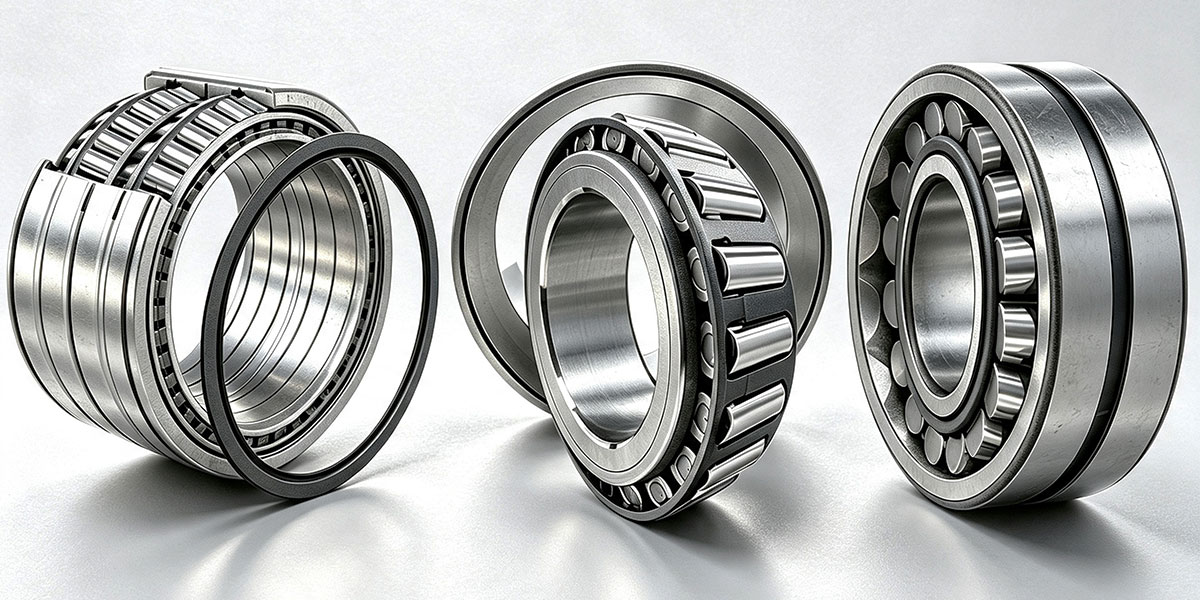
Proper lubrication is one of the most important factors affecting bearing performance, reliability, and service life.
The correct lubricant helps reduce friction, control operating temperature, prevent wear, and protect bearing components from contamination. On the other hand, insufficient lubrication, improper lubricant selection, or contamination can lead to overheating, vibration, noise, and premature bearing failure.
Whether used in electric motors, gearboxes, pumps, conveyors, machine tools, or heavy industrial equipment, understanding bearing lubrication principles helps improve equipment reliability and reduce maintenance costs.
This guide explains how bearing lubrication works, the differences between grease and oil lubrication, common lubrication methods, lubricant selection criteria, and maintenance best practices.
1. Why Is Bearing Lubrication Important?
Lubrication creates a protective film between rolling elements and raceways, reducing direct metal-to-metal contact.
Proper lubrication helps to:
- Reduce friction and heat generation
- Minimize wear between contacting surfaces
- Prevent surface damage and premature fatigue
- Protect against corrosion
- Reduce vibration and operating noise
- Improve energy efficiency
- Extend bearing service life
Without adequate lubrication, friction increases rapidly, causing higher operating temperatures and accelerated bearing wear.
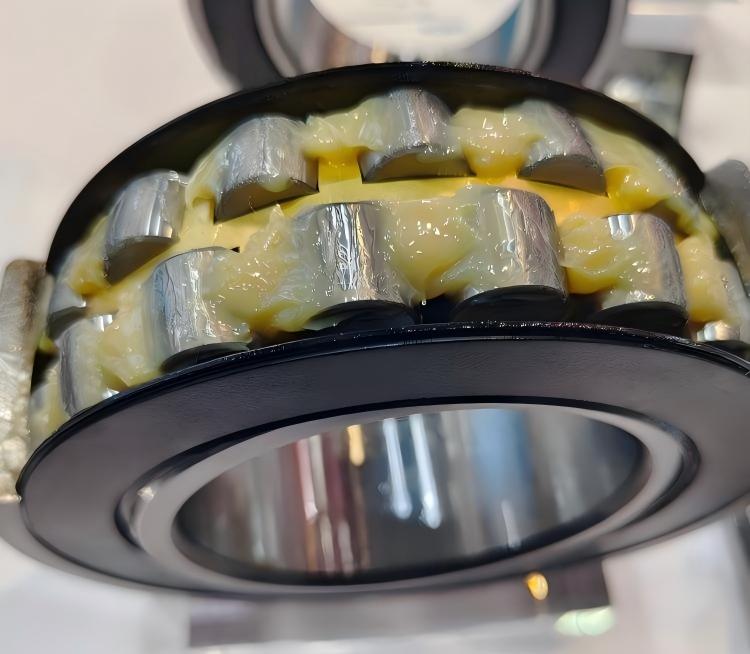
2. How Bearing Lubrication Works
When a bearing operates, rolling elements continuously move between the inner and outer raceways.
The base oil contained in the lubricant forms a thin protective film between these surfaces. This film separates the contacting parts and allows smooth rolling motion.
Effective lubrication helps:
- Carry operating loads
- Reduce friction resistance
- Prevent surface contact damage
- Minimize wear and fatigue
- Maintain stable bearing performance
The goal of lubrication is to maintain a sufficient lubricant film under actual operating conditions.
3. Main Types of Bearing Lubrication
There are two primary lubrication methods used for rolling bearings:
- Grease lubrication
- Oil lubrication
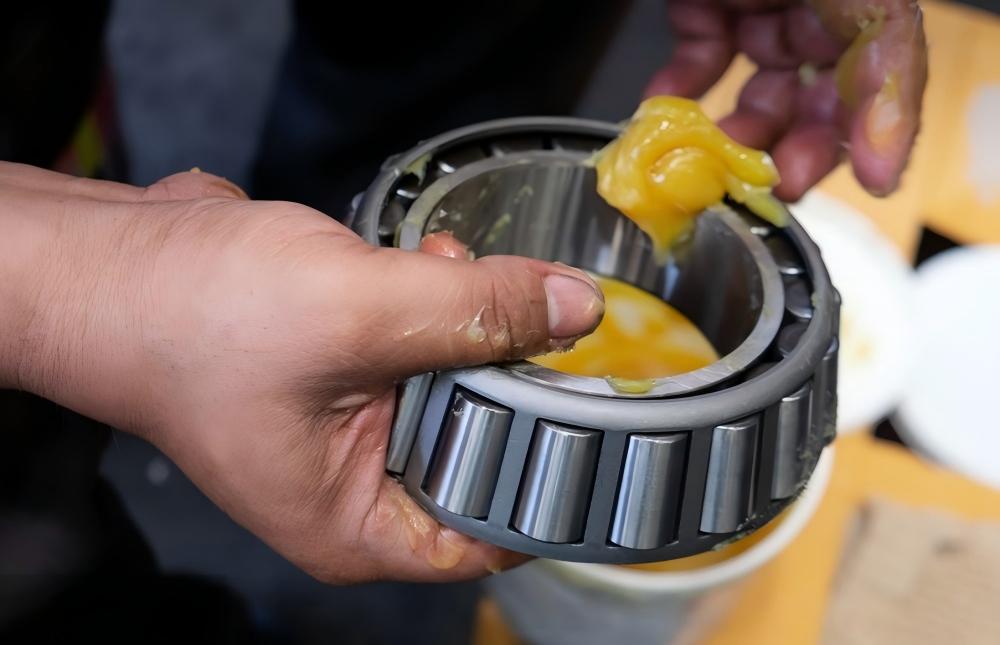
3.1 Grease Lubrication
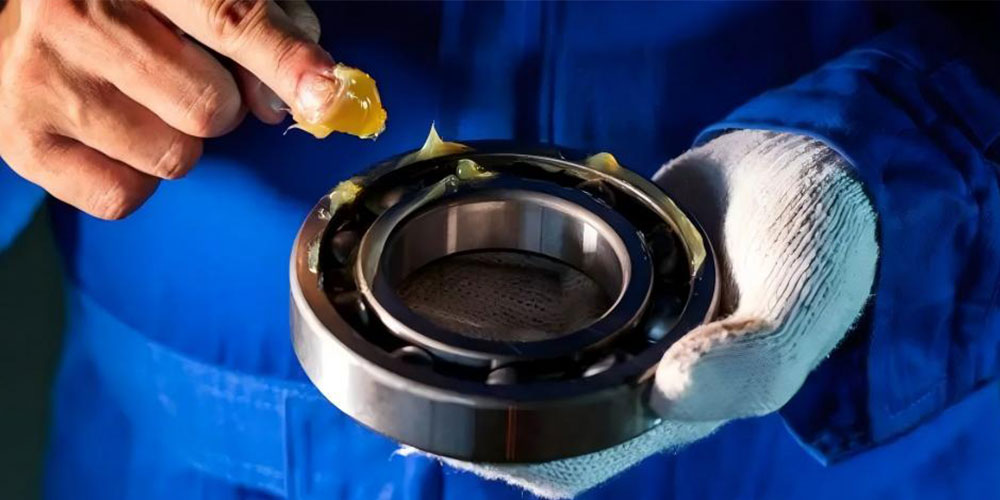
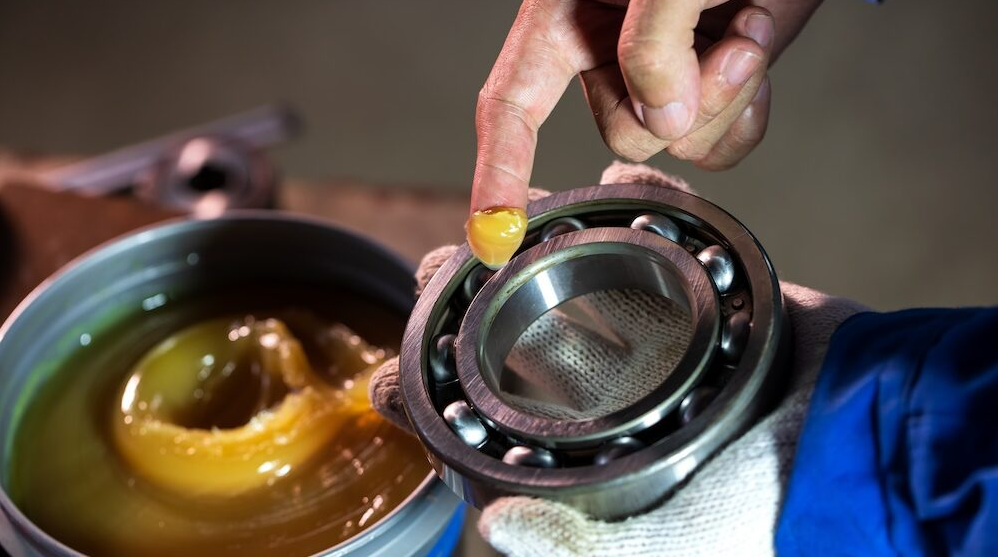
Grease is the most commonly used lubricant for rolling bearings because it is simple, reliable, and suitable for a wide range of applications.
Bearing grease mainly consists of:
- Base oil
- Thickener
- Performance additives
The base oil provides lubrication, while the thickener helps retain the lubricant inside the bearing.
Advantages of Grease Lubrication
- Simple installation and maintenance
- Excellent sealing capability
- Good protection against dust and moisture
- Low leakage risk
- Suitable for long-term operation
- Lower maintenance requirements
Limitations
- Limited cooling capability compared with oil
- Not suitable for some ultra-high-speed applications
- Requires periodic relubrication
Common Applications
Grease-lubricated bearings are widely used in:
- Electric motors
- Fans
- Pumps
- Agricultural machinery
- Conveyors
- Household appliances
- General industrial equipment
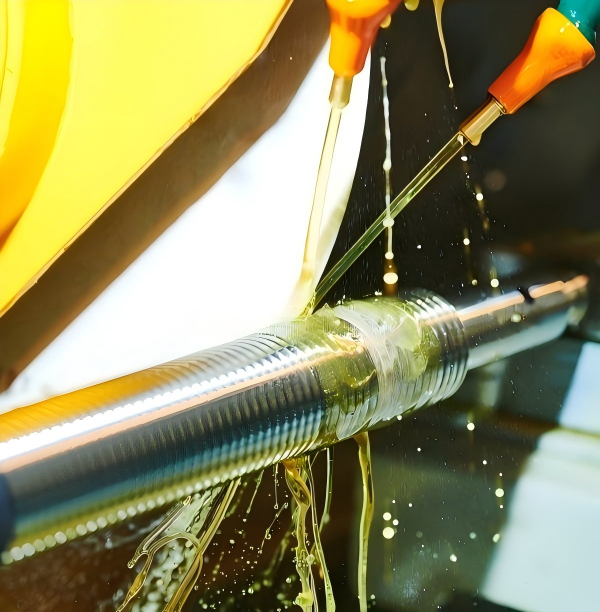
3.2 Oil Lubrication
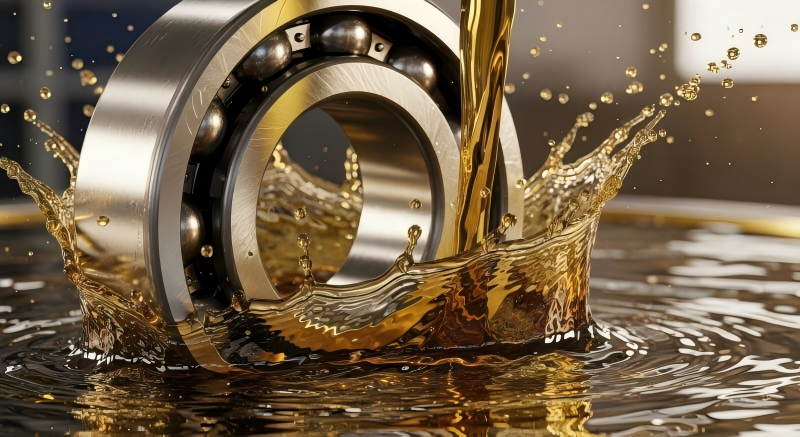
Oil lubrication uses liquid lubricant supplied continuously or periodically to the bearing.
It is commonly selected for applications requiring high speed, high temperature control, or continuous operation.
Advantages of Oil Lubrication
- Excellent cooling performance
- Suitable for high-speed operation
- Better heat removal
- Can remove contaminants through filtration systems
- Suitable for demanding industrial applications
Limitations
- More complex lubrication systems
- Higher maintenance requirements
- Greater leakage risk
- Additional equipment may be required
Common Applications
Oil lubrication is commonly used in:
- Gearboxes
- Turbines
- Machine tools
- High-speed spindles
- Steel mills
- Large industrial machinery
4. Grease vs Oil Lubrication
| Feature | Grease | Oil |
|---|---|---|
| Maintenance | Low | Moderate to High |
| Cooling Capability | Limited | Excellent |
| High-Speed Capability | Moderate to Good | Excellent |
| Leakage Risk | Low | Higher |
| Contamination Protection | Excellent | Good |
| Installation | Simple | More Complex |
| Operating Cost | Lower | Higher |
In general, grease is preferred for simplicity and reliability, while oil is preferred for high-speed operation and applications requiring efficient heat removal.
5. Common Bearing Lubrication Methods
5.1 Manual Greasing
Manual lubrication uses a grease gun or manual tools to add lubricant at scheduled intervals.
Suitable for:
- Small equipment
- Standard industrial machinery
- Periodic maintenance applications
5.2 Automatic Lubrication Systems
Automatic lubricators supply grease at controlled intervals.
Benefits include:
- Consistent lubricant supply
- Reduced labor requirements
- Lower risk of under-lubrication or over-lubrication
- Improved equipment reliability
Ideal for:
- Continuous production lines
- Remote equipment
- Hard-to-access bearings
5.3 Oil Bath Lubrication
In oil bath lubrication, the bearing partially rotates through an oil reservoir.
Suitable for:
- Gearboxes
- Industrial transmissions
- Moderate-speed applications
5.4 Oil Circulation Lubrication
Oil is continuously pumped through the bearing system.
Advantages:
- Excellent cooling
- Continuous lubrication supply
- Heat and contaminant removal through filtration
Common applications:
- Steel mills
- Paper mills
- Large gearboxes
- Heavy industrial machinery
5.5 Oil Mist Lubrication
Oil mist systems deliver a fine mist of oil particles to the bearing.
Suitable for:
- High-speed rotating equipment
- Compressors
- Certain turbine applications
5.6 Oil-Air Lubrication
Oil-air lubrication supplies a precise amount of oil carried by compressed air.
Advantages:
- Very low friction
- Minimal heat generation
- Accurate lubricant delivery
Typical applications:
- CNC machine tool spindles
- Precision bearings
- High-speed equipment
6. Choosing the Right Bearing Lubricant
Selecting the correct lubricant depends on several operating conditions.
Load
Heavy loads require lubricants with suitable load-carrying capability and the correct viscosity to maintain an adequate lubrication film.
Speed
- High-speed bearings usually require lower-viscosity oils or specialized low-friction grease.
- Low-speed applications may require lubricants with higher viscosity and better load protection.
Temperature
Consider:
- High-temperature stability
- Low-temperature starting performance
- Oxidation resistance
Operating Environment
The lubricant selection should consider exposure to:
- Water
- Dust
- Chemicals
- Humidity
- Corrosive environments
- Food processing conditions
Specialized greases are available for different operating environments.
Bearing Type
Different bearing designs have different lubrication requirements.
Examples:
- Deep groove ball bearings: General-purpose grease or oil lubrication
- Angular contact ball bearings: High-speed grease or low-viscosity oil
- Tapered roller bearings: Load-resistant grease for combined loads
- Spherical roller bearings: High-performance grease for heavy-duty applications
- Thrust bearings: Lubricants selected according to axial load and speed
7. How Much Grease Should You Use?
A common mistake is assuming that more grease always provides better lubrication.
Excessive grease can cause:
- Increased friction
- Higher operating temperature
- Grease churning
- Increased power consumption
- Reduced bearing life
As a general guideline:
- High-speed bearings usually require lower grease filling levels to reduce churning.
- Medium-speed applications typically require moderate grease quantities.
- Low-speed or heavily loaded bearings may require higher grease amounts.
The correct grease quantity depends on bearing size, speed, housing design, operating temperature, and manufacturer recommendations.
8. Common Bearing Grease Types
Different applications require different grease formulations.
Common bearing grease types include:
Lithium Grease
- General-purpose bearing grease
- Good mechanical stability
- Widely used in industrial applications
Lithium Complex Grease
- Better high-temperature performance
- Suitable for heavier loads and demanding conditions
Polyurea Grease
- Excellent temperature resistance
- Commonly used in electric motors and high-speed applications
Calcium Sulfonate Complex Grease
- Excellent water resistance and corrosion protection
- Suitable for harsh environments
Synthetic Grease
- Designed for extreme temperatures and special operating conditions
9. Signs of Poor Bearing Lubrication
Improper lubrication can cause early bearing failure.
Common warning signs include:
- Excessive temperature
- Increased vibration
- Abnormal noise
- Grease leakage
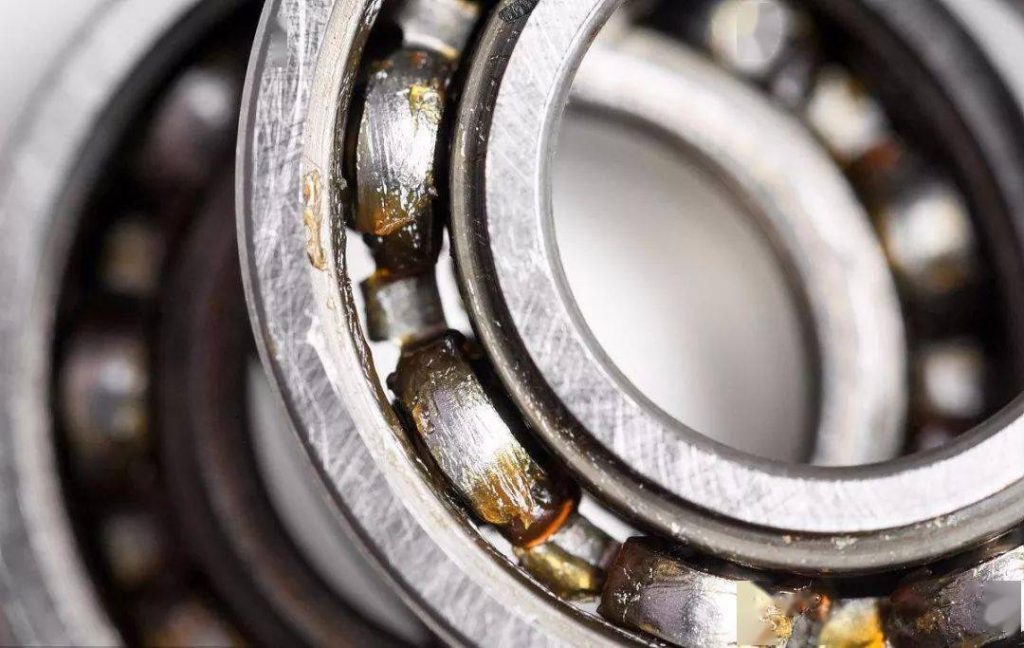
- Discolored lubricant
- Premature wear
Regular inspection helps identify lubrication problems before serious damage occurs.
10. Common Bearing Lubrication Mistakes
Avoid these common mistakes:
Using the wrong lubricant
Mixing incompatible greases
Over-greasing or under-greasing
Ignoring relubrication schedules
Allowing contamination during lubrication
Using degraded lubricants
Proper lubrication practices improve bearing reliability and reduce downtime.
11. Bearing Lubrication Best Practices
For longer bearing life:
- Select the correct lubricant for the application
- Keep lubricant clean and properly stored
- Follow recommended relubrication intervals
- Monitor temperature and vibration
- Confirm grease compatibility before mixing
- Use automatic lubrication systems when needed
Conclusion
Bearing lubrication is essential for reducing friction, controlling temperature, preventing wear, and extending bearing service life.
Choosing the right lubricant depends on bearing type, speed, load, temperature, and operating conditions. Proper lubrication practices help improve equipment reliability, reduce downtime, and lower maintenance costs.
MBY supplies a wide range of rolling bearings with reliable quality, flexible OEM services, and professional technical support. We help customers select the right bearing solutions for a wide variety of industrial applications.
FAQ
- What is the best lubricant for bearings?
There is no universal best lubricant. The right choice depends on bearing type, speed, load, temperature, and operating environment.
- Is grease better than oil for bearings?
Grease provides easier maintenance and better sealing protection, while oil offers better cooling performance and is preferred for high-speed or high-temperature applications.
- How often should bearings be lubricated?
Lubrication intervals depend on bearing size, speed, load, temperature, and operating conditions. Always follow manufacturer recommendations.
- Can you over-grease a bearing?
Yes. Excessive grease can increase friction, raise operating temperature, and reduce bearing service life.
- Can different bearing greases be mixed?
Generally, mixing different grease types is not recommended because incompatible greases may reduce lubrication performance.